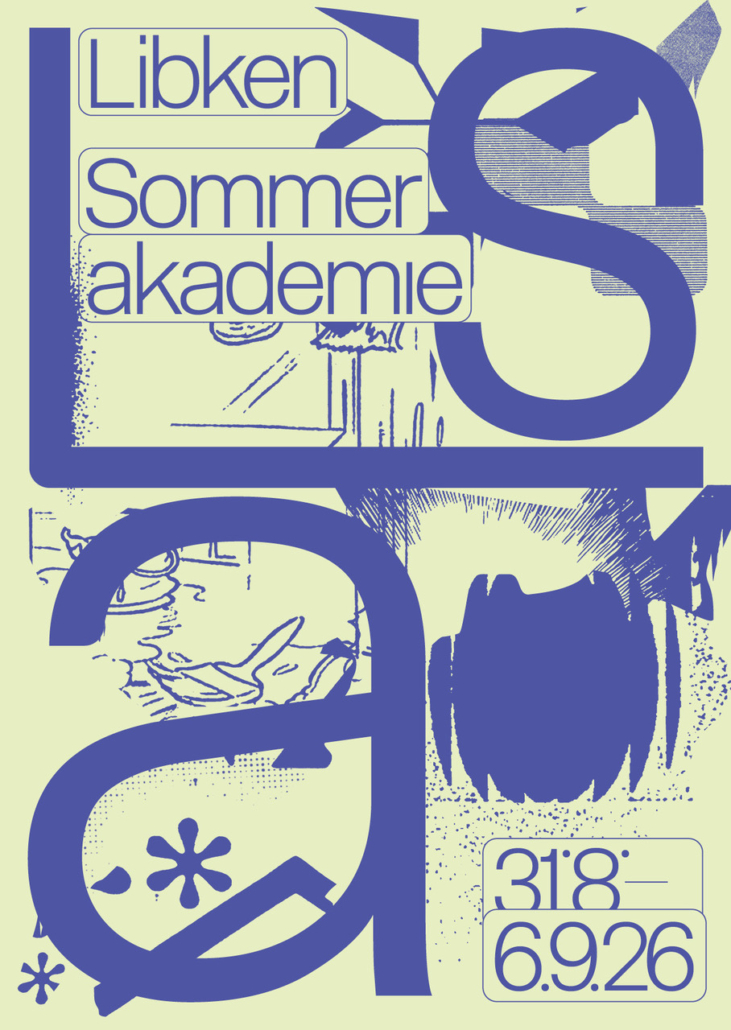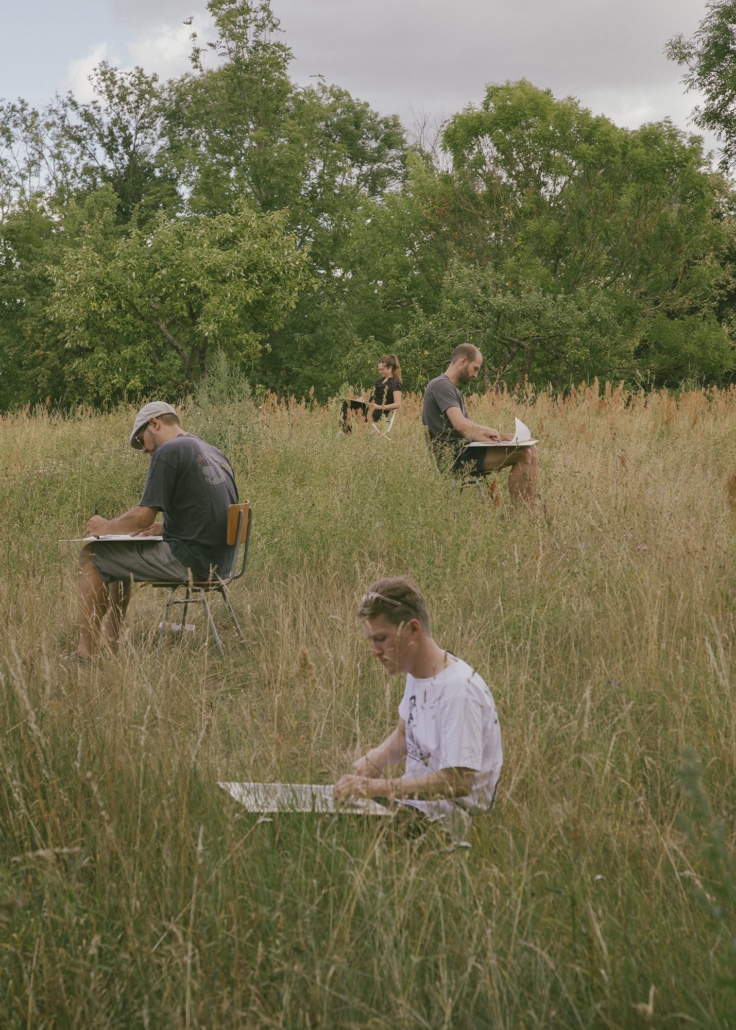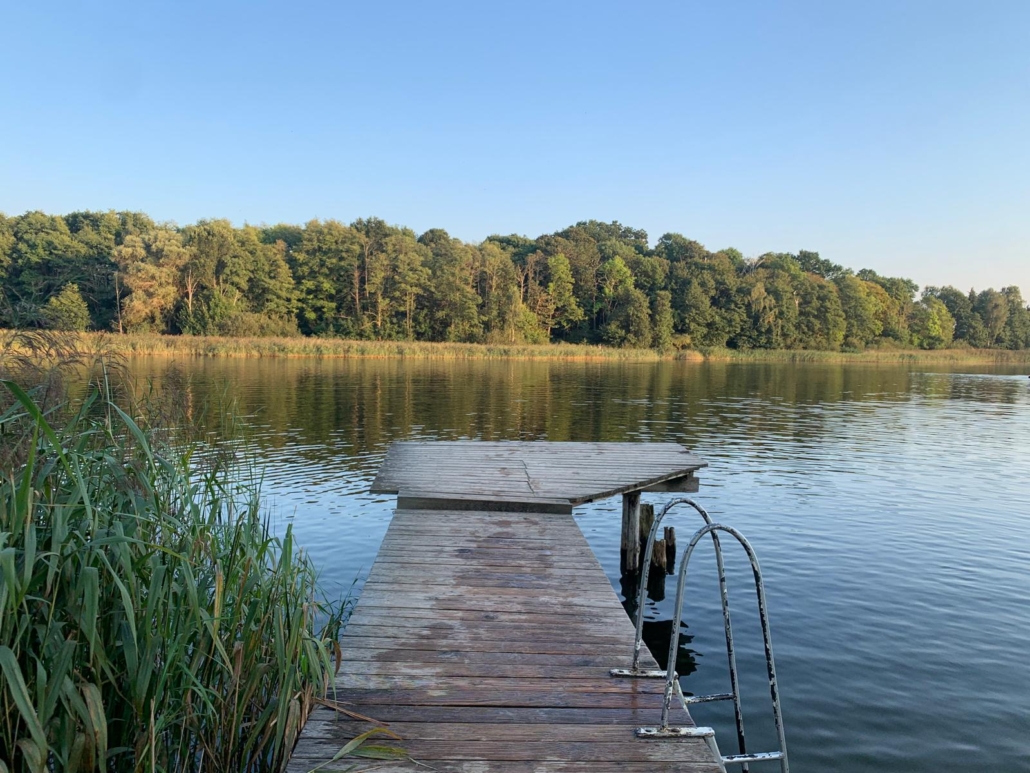
The annually held Summer Academy is a one-week interdisciplinary workshop led by experienced lecturers from various fields of art, inviting participants to engage artistically with changing thematic focuses.
Since there are still a few places available, we have extended the registration deadline until July 15
Please send us a few lines about yourself and your work to:
sommerakademie2026@libken.de
When: August 31 – September 6, 2026, exhibition on September 5, 2026
Where: Libken e.V.
Ort Böckenberg 15 – 17
17268 Gerswalde
Info Zoom
On July 6, 2026, there will be an Info Zoom session from 6–7 pm about the Summer Academy. Register here.
Solidarity Place
We are offering one solidarity place for €350 (instead of €600).
Please apply by July 1 with a few lines about yourself and, if possible, work samples or a link to your website.
sommerakademie2026@libken.de
Summer Academy Libken No. 9 – 2026
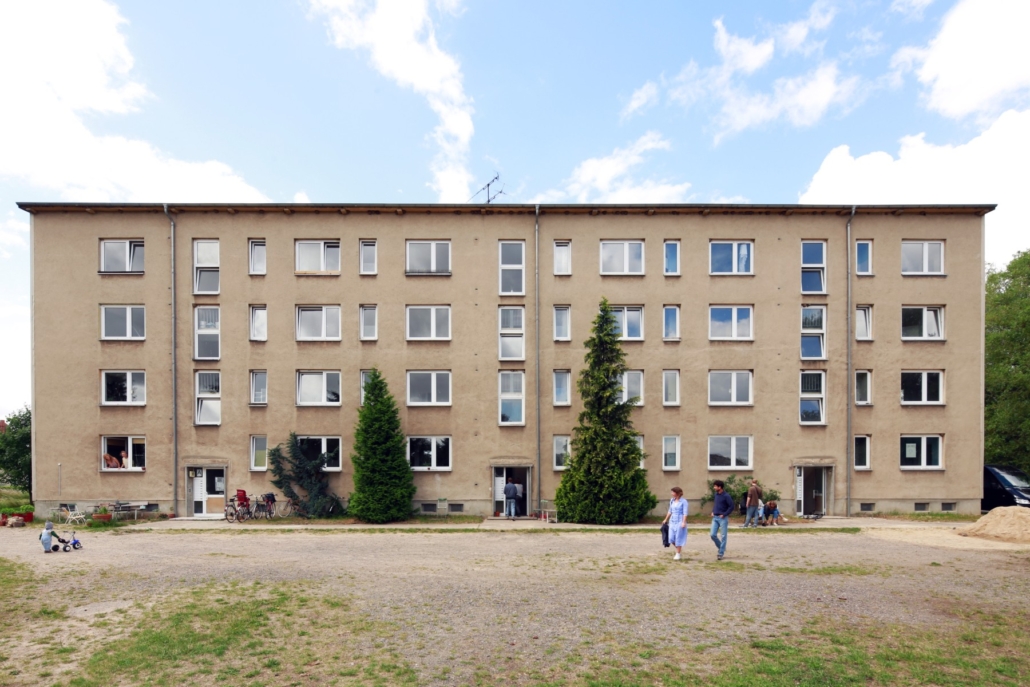
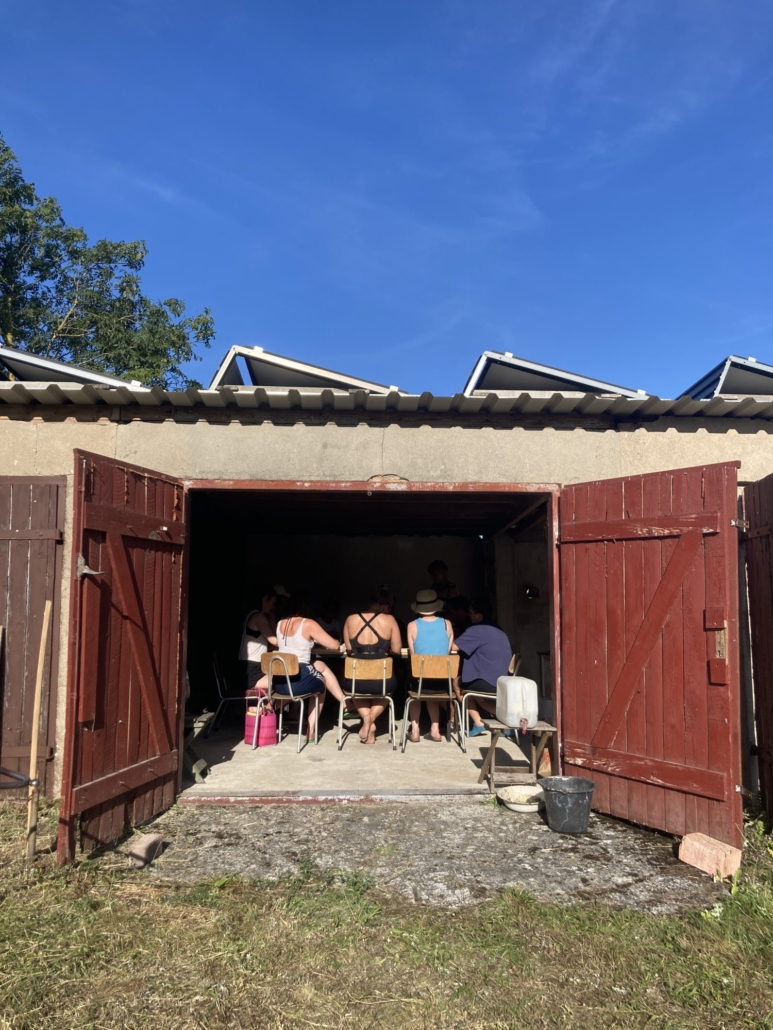
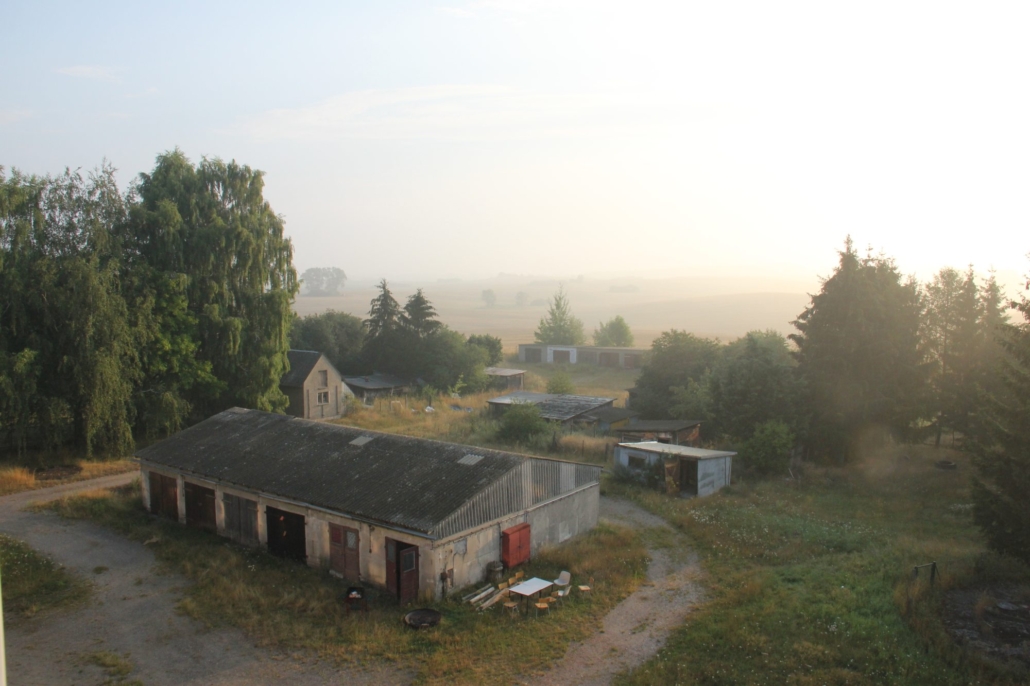
The one-week interdisciplinary Summer Academy in Libken is an invitation to live and work artistically together, detached from familiar environments and structures. For the ninth year, the Summer Academy takes place at the Libken artist residency, a prefabricated apartment building with a large garden area in the rural Uckermark region.
The theme of this year’s Summer Academy is The Collective Space and the SELF — an exploration through the artistic practices of ceramics, photography, painting, performance, text, and conversation. How do we want — and how are we able — to work and act artistically today in a time of cultural budget cuts, war, climate crisis, and social polarization?
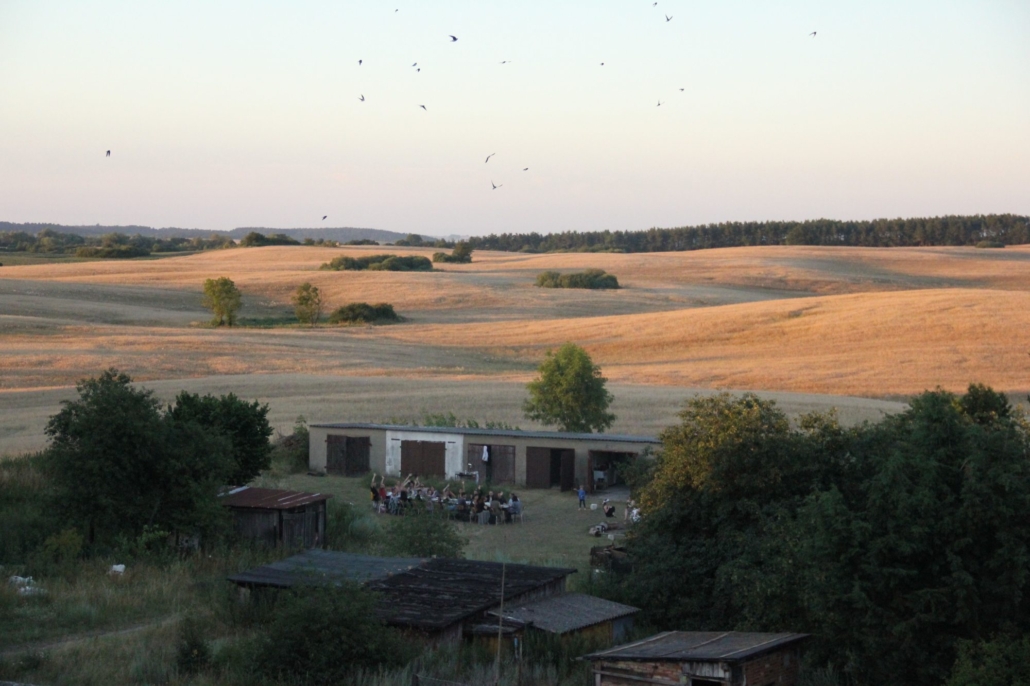
The Summer Academy at the Libken artist residency sees itself as a laboratory, an experimental space, and a collective site for thinking and working in the Uckermark — in the countryside of eastern Germany. In a region shaped by ruptures, reinterpretations, and contradictory social experiences.
Starting from this specific place, the Summer Academy raises questions of appropriation, responsibility, and giving back: What does it mean to approach a place artistically, to inhabit it temporarily, and to live and work together within it? What does it mean to experiment with solidaric forms of living and working together in a prefabricated apartment building?
At the center are questions of individuality and collectivity, of artistic authorship and shared practice. After extensive research, does one begin to feel like a foreign body, with the desire to retreat into one’s familiar bubble? Are we thrown back onto ourselves, or do we experience permeability? How much honesty, curiosity, and genuine interest are needed for an artistic process not only to emerge from a place, but also to give something back to it?
We want to explore Libken as a specific resonant space: as a rural place in eastern Germany where history, the present, structural change, political tensions, and questions of belonging collide directly. Especially here, the question arises of how discourse is still possible today: How can we speak controversially with one another, endure differences, and nevertheless move toward each other — even when political viewpoints differ greatly?
In this way, the Summer Academy also connects to artistic and social debates currently being discussed internationally, for example at this year’s Venice Art Biennale: questions of representation, witnessing, documentation, community, experiences of crisis, and the role of art in a fragile present. At the same time, the focus is deliberately shifted away from large international exhibition formats back to the concrete place itself: to Libken, the Uckermark, everyday coexistence, attentive observation, and careful listening.
A special role is played by artistic-documentary work — not as mere representation of reality, but as an artistic practice of observing, collecting, questioning, and making visible. Between subjective perception and collective reality, new forms of artistic research and engagement emerge.
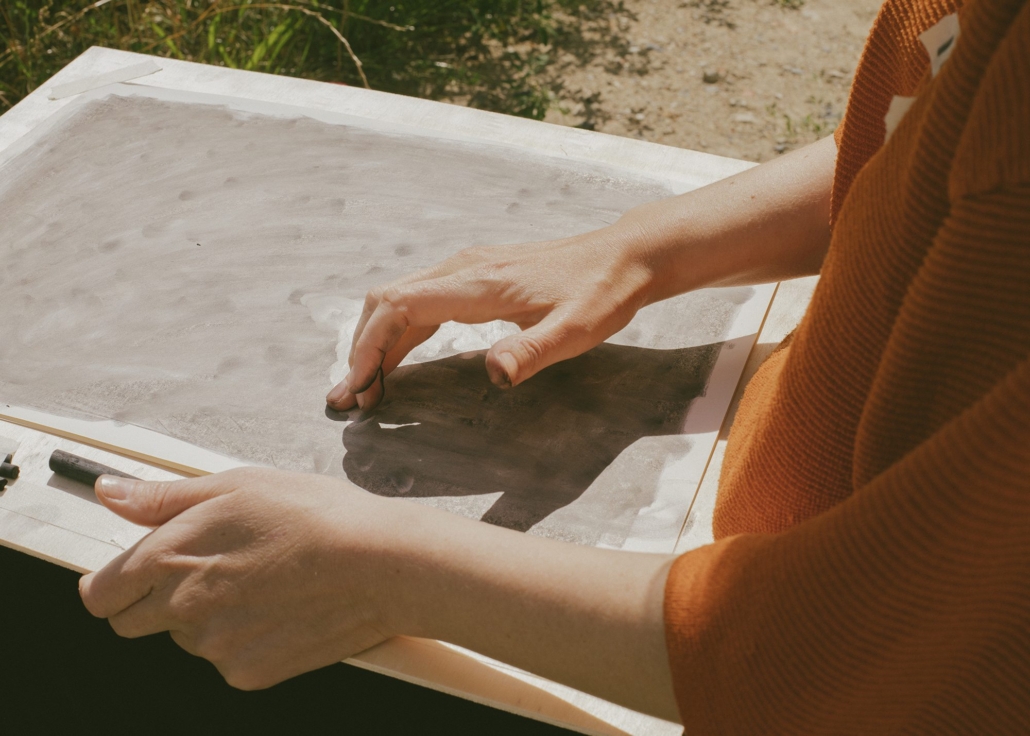
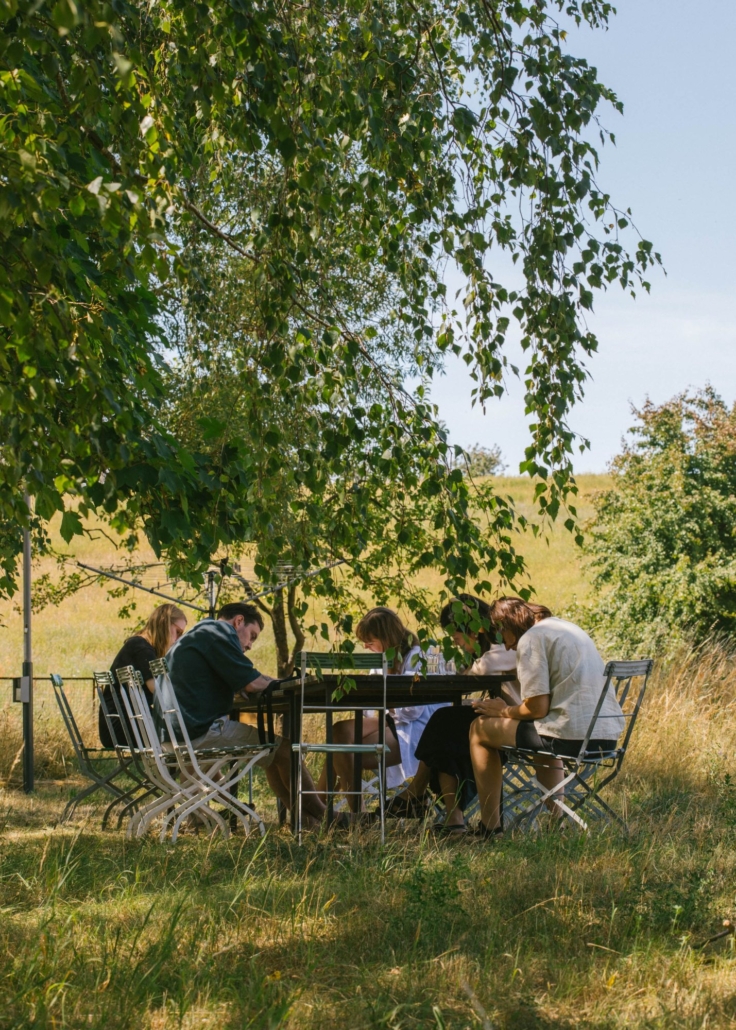
A wide range of artistic approaches and connections between them are possible: ceramics, drawing, painting, photography, text, voice, performance, as well as experimental and documentary formats. Libken thus becomes an open workspace for artistic research and collective practice — for the attempt to relate to one another and to test new forms of working, living, and storytelling beyond everyday structures and conditions. We strive for a collective and egalitarian space in which we can learn together and from one another, and discuss our own work and the work of other participants with appreciation and respect.
The Summer Academy concludes with a celebration and a public presentation on September 5, 2026: the extensive grounds and spaces of Libken offer diverse possibilities for different presentation formats, which can be developed collectively and individually.
Working Together in Libken
Active participation in organizing and carrying out all collective activities, as well as a willingness to engage in communal processes, forms the foundation of our collective living and working in Libken. Furthermore, we understand the Libken Summer Academy as a space of respectful and discrimination-sensitive interaction, and we clearly position ourselves against all forms of exclusion, racism, and antisemitism.
Costs: 600 euros per person,
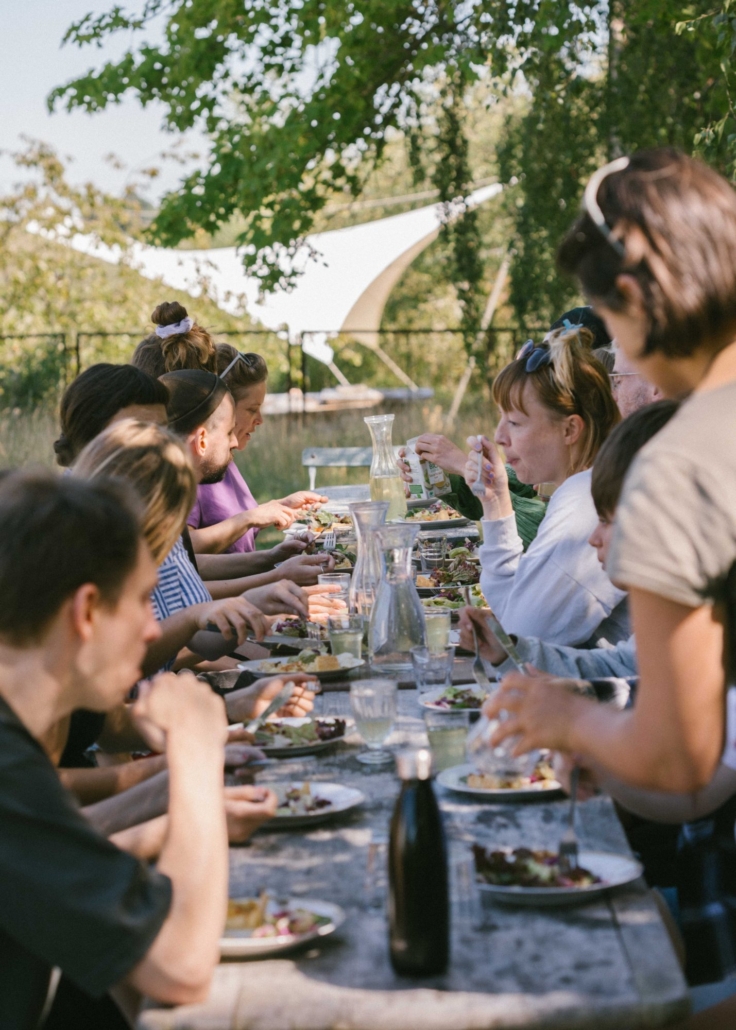
including accommodation, materials, and full vegan-vegetarian catering.
We offer one or two solidarity-based places for people in precarious living situations. If your circumstances allow it, please choose the full price. By doing so, you also enable workshop participants with fewer financial resources to take part.
Concept and Organization: Sophia Kesting in cooperation with Susanne Kim and Katharina Reinsbach
Sophia Kesting (*1983 in Leipzig) is a visual artist, photographer, researcher, and educator. She lives and works in Leipzig and Brussels.
She studied Visual Communication at HTW Berlin and Photography at the Academy of Fine Arts Leipzig (HGB), where she graduated in 2016 and became a master student of Prof. Joachim Brohm in 2018. In her artistic practice, she investigates social and societal systems of order and makes visible the ruptures between past, present, and future.
Starting from the photographic image, she works with text, sound, and archival material in the format of artistic research through spatial installations, long-term photographic projects, and lecture performances. Since 2010, her work has been shown nationally and internationally in galleries, museums, and off-spaces.
In 2023, she received the Bronze Medal of the German Photo Book Award for Rewriting the Photographic Image, and in 2024 a working grant from Stiftung Kunstfonds. In 2026, her collaborative work with Dana Lorenz, Asphalt, Steine, Scherben, was nominated for the Merck Photography Award. From October 2026 onward, she will be an artist-in-residence fellow at the Boghossian Foundation’s Villa Empain in Brussels. Until 2023, Kesting taught at HGB Leipzig, in 2025/2026 she represented Ricarda Roggan’s professorship at the State Academy of Fine Arts Stuttgart.
Since 2023, she has also been a founding and board member of Un/learning art and design education e.V.
In 2024, she was already responsible for the conception, organization, and realization of the Libken Summer Academy and has been regularly visiting and working in Libken since its early years.
www.sophiakesting.com
www.asphaltsteinescherben.com
https://unlearning-art-design.org/
Katharina Reinsbach (*1993 in Berlin) lives and works as an artist in Berlin. She studied Painting/Fine Arts at Weißensee Academy of Art Berlin with Prof. Friederike Feldmann and Prof. Pia Linz, graduating as a master student in 2024. She also studied at Chelsea College of Art London and the Academy of Fine Arts Warsaw. Her works have been shown in numerous exhibitions, most recently at Cub_ism_Artspace, Shanghai, Galerie Parterre Berlin, Stiftung Schloss Genshagen, ZAK – Zentrum für aktuelle Kunst, and Brücke Museum. In 2022, she received the Mart Stam Scholarship/Deutschlandstipendium. In 2026, she was awarded the emerging artist grant of GSE gGmbH as well as various project grants, including from the Mart Stam Society and, together with Rahel Goetsch, from the Hessian Cultural Foundation for the production of the artist book What day is it today?
katharinareinsbach.com
@katsophier
Susanne Kim was born in Dresden and lived for some time in Syria with her parents. Shortly before the fall of the Berlin Wall, they traveled to Hungary on a so-called “holiday” in order to flee from there to West Germany. She later studied again in Leipzig and graduated with a degree in journalism. She attended the European Film College in Denmark, participated among others in the Berlinale Talent Campus, and attended the Professional Media Master Class (PMMC) in Halle.
Her documentary films ZUSAMMENGEBACKEN (2003), WHITE BOX (2010), DIE BANDE (2011), TROCKENSCHWIMMEN (2016), and MEINE WUNDERKAMMERN (2021) have been shown at numerous festivals worldwide. From January 2024 to February 2025, MEINE WUNDERKAMMERN was exhibited as an immersive spatial and sound installation with virtual reality animations at the Gallery of Contemporary Art (GfZK) Leipzig, accompanied by a mediation program on film and VR. Susanne’s current film BECOMING KIM tells her personal German-Korean family history. She lives and works in Leipzig.
https://trockenschwimmen.de/
https://meine-wunderkammern.de/
https://gfzk.de/?s=meine+wunderkammern
https://www.dokfest-muenchen.de/Interview-Susanne-Kim